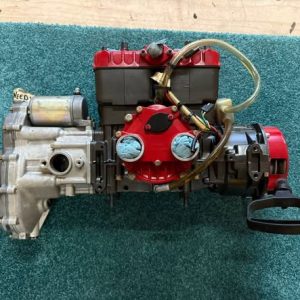
The Rotax 582 “Blue Head” RAVE Engine – Built by Rotax Rick may support an ultralight restoration, experimental-aircraft project, gyrocopter application, powered-parachute build, or replacement-engine requirement.
A Rotax 582 Blue Head may also be marketed as a Rotax 582 Blue Head RAVE Engine or Rotax 582 Aircraft Engine when its cylinder-head design, power-valve system, accessories, and build history are verified.
Whether described as a Rotax 582 Two-Stroke Engine, Rotax 582 Ultralight Engine, Rotax 582 Aviation Engine, or Rotax 582 65HP Engine, professional inspection should precede installation.
Whether buyers need a Rotax Blue Head Engine, Liquid-Cooled Aircraft Engine, Two-Cylinder Aircraft Engine, or Lightweight Aircraft Engine, the complete engine package should be evaluated.
A Rotax Aviation Engine should be selected through technical evaluation rather than brand recognition alone.
Identifying the Rotax 582 RAVE Configuration
The seller should provide detailed photographs of the engine from every side, including the data plate, heads, cylinders, carburetors, gearbox, ignition, exhaust ports, and accessories.
The buyer should determine whether the engine was rebuilt from a complete core, assembled from mixed components, upgraded from another configuration, or built using new and used parts.
Confirming Rotax Rick Build Records
The phrase built by Rotax Rick should be supported by documentation identifying the builder, build date, work performed, components installed, inspections completed, and any testing conducted.
The engine should be evaluated according to its documented work rather than the reputation of the builder alone.
Evaluating RAVE Engine Condition
The RAVE system uses exhaust-side valve components intended to influence engine breathing across different operating conditions when correctly configured and maintained.
Professional service can support more consistent performance from the Rotax 582 RAVE Engine.
Understanding Rotax 582 Two-Stroke Power
A two-stroke aircraft engine produces power through a compact operating cycle that can deliver a strong power-to-weight ratio for suitable light-aircraft applications.
The buyer should determine whether the engine uses oil injection, premixed fuel, or another documented lubrication arrangement.
Understanding the Rotax Cooling System
Cooling performance depends on the radiator, coolant pump, hoses, clamps, fittings, expansion tank, thermostat where installed, coolant condition, and airflow.
The radiator should be sized and positioned appropriately for the aircraft installation and expected airflow environment.
Inspecting Cylinders, Pistons, and Crankcase
The two-cylinder configuration combines a compact engine layout with coordinated crankshaft, piston, cylinder, induction, exhaust, and ignition operation.
Professional internal evaluation supports the long-term value of the Two-Cylinder Aircraft Engine.
Inspecting Rotax 582 Carburetors
Float condition, needles, jets, slides, boots, fittings, and fuel lines should be inspected.
A setting that worked on another aircraft may not be suitable for the receiving installation.
Maintaining Reliable Combustion
Complete ignition evaluation supports more dependable operation of the Rotax Aviation Engine.
Professional electrical maintenance supports reliable Experimental Aircraft Engine operation.
Selecting a Compatible Propeller System
The exact gearbox model, ratio, serial information, service history, and included components should be confirmed before purchase.
Service records should identify oil changes, inspections, component replacement, and operating hours where applicable.
Maintaining Exhaust Connections and Supports
Expansion-chamber geometry, mounting, joints, springs, supports, seals, silencers, and clearances can influence engine behavior and installation reliability.
Exhaust components should be inspected for cracks, corrosion, dents, failed welds, loose springs, worn joints, heat damage, and evidence of airframe contact.
Using the Rotax 582 in Light Aircraft
Engine weight should be calculated with the gearbox, exhaust, radiator, coolant, starter, carburetors, filters, mounts, and other installed accessories included.
A lighter engine is not automatically suitable if the aircraft requires ballast, structural modification, or a different propeller arrangement.
Ultralight and Experimental Aircraft Applications
Aircraft-specific evaluation supports responsible Ultralight Aircraft Engine selection.
An Experimental Aircraft Engine installation may require custom mounts, controls, radiator placement, exhaust routing, fuel-system work, instruments, and cowling modifications.
Understanding Installation Responsibilities
Engine condition and aircraft eligibility are separate considerations.
The installation should address fuel, cooling, ignition, exhaust, gearbox, propeller, instruments, controls, and emergency procedures.
Documenting Time Since Build
Calendar time and storage conditions can matter even when operating hours are limited.
Missing records do not automatically make the engine unusable, but they increase the need for detailed evaluation.
Documenting Start and Operating Behavior
A controlled engine run can provide useful information about starting, idle quality, throttle response, cooling, ignition operation, fuel delivery, vibration, leakage, and unusual noise.
An unloaded or lightly loaded test may not reveal issues that appear under flight power.
Inspecting Rotax 582 Engine Health
A single measurement should not replace a complete review of operating history, internal parts, build records, and run behavior.
Unknown internal condition should be disclosed clearly.
Evaluating a Rotax Rick Engine Build
The buyer should obtain enough information for a qualified Rotax engine specialist or experienced aviation mechanic to evaluate the powerplant.
- Request detailed photographs of all identification markings, cylinder heads, crankcase, carburetors, ignition components, gearbox, exhaust ports, coolant fittings, starter, and included accessories.
- Review documentation for crankshaft replacement, bearings, seals, pistons, rings, cylinders, RAVE service, carburetor work, ignition inspection, gearbox maintenance, and run testing.
- Confirm the invoice, payment protection, shipping method, freight insurance, inspection period, return conditions, and stated engine status.
Shipping and Storing the Rotax 582
Professional packaging protects the Rotax 582 Aircraft Engine from avoidable freight damage.
The crankshaft and gearbox should not carry unsuitable shipping or storage loads.
Integrating Fuel, Cooling, and Electrical Systems
Professional preparation protects both the engine and aircraft.
Ignition and electrical wiring should be grounded, routed, secured, and labeled appropriately.
After installation, technicians should verify fastener security, engine alignment, propeller tracking, gearbox condition, fuel flow, carburetor synchronization, ignition operation, coolant circulation, instrument accuracy, and absence of leakage.
Maintaining the Rotax 582 Blue Head Engine
Long-term maintenance includes inspection of spark plugs, carburetors, fuel lines, filters, cooling hoses, coolant, ignition parts, RAVE components, exhaust supports, gearbox, mounts, wiring, and leaks.
The engine should receive additional inspection after propeller damage, sudden stoppage, overheating, severe vibration, fuel contamination, coolant loss, or extended storage.
Choosing a Lightweight Aviation Powerplant
Honest product information strengthens buyer confidence and reduces disputes.
Commercial evaluation should focus on verified usability rather than appearance or price alone.
Choosing the Rotax 582 “Blue Head” RAVE Engine – Built by Rotax Rick
The Rotax 582 “Blue Head” RAVE Engine – Built by Rotax Rick may suit aircraft builders, sport pilots, gyrocopter operators, powered-parachute owners, restoration specialists, and aviation parts buyers seeking a Lightweight Aircraft Engine documented two-stroke engine.
The strongest purchasing decision begins with confirming the exact engine model, serial number, RAVE configuration, builder documentation, internal parts, crankshaft history, operating hours, gearbox ratio, carburetors, ignition, cooling system, exhaust, test results, and included accessories.
Whether the engine is purchased for replacement, restoration, a kit-built aircraft, gyrocopter, powered parachute, recreational aircraft, or spare inventory, transparent information and responsible oversight provide the strongest foundation.
With responsible purchasing, careful fuel and oil management, effective cooling, synchronized carburetors, and preventive inspection, the engine can remain a valuable light-aircraft asset.